Since being selected by the Ministry of Education (MOE) as a benchmark university for the ‘Bilingual Education for Students in Higher Education Program’ in 2021, NTNU has made significant strides in advancing its bilingual education initiatives with clear objectives and well-defined strategies. These efforts have positioned NTNU as a leader in the internationalization of higher education. Key achievements include:
Coordinated Efforts to Promote a Bilingual Learning Environment
Following the program’s approval, NTNU established the Office of Bilingual Education to implement its bilingual strategies. An assessment of the university’s resources, coupled with stakeholder input, led to the creation of 35 performance indicators, which are refined annually.
NTNU President Cheng-Chih Wu oversees the initiative, regularly convening the steering committee to evaluate progress and adjust strategies. President Wu emphasized, ‘ NTNU isn’t aiming to become a fully English-language university. Instead, we’re using the bilingual university program, in line with our development plans, to enhance international engagement and cultivate a vibrant, multilingual learning environment as part of our broader internationalization goals.’
The program focuses on developing English as a Medium of Instruction (EMI) courses, recognizing that their success also depends on informal and supplementary curricula. Academic and administrative departments work together to build a robust bilingual environment, which underscores NTNU’s comprehensive approach to promoting bilingual education.
Building an International and Bilingual Campus Environment
NTNU employs 51 foreign faculty members, and international students currently make up 12% of the student body, contributing to a diverse and globally engaged campus. In 2023, the number of English as a Medium of Instruction (EMI) courses reached 886, with over half of current students enrolled in at least one.
The bilingual program operates on the principle of ‘creating opportunities through choice,’ offering more EMI courses to enhance students’ bilingual skills and global competitiveness. Course development follows a phased approach: starting with foundational English, progressing to academic English in professional fields, and culminating in EMI courses specific to each college.
Vice President of Academic Affairs Mei-Hui Liu noted, ‘NTNU’s EMI courses have grown from 497 before the program began to 886 in the 2023 academic year, an increase of 78%. More than half of the students have taken EMI courses.’
Currently, all undergraduate programs offer at least 18 credits of EMI courses, and nearly 70% of graduate programs provide fully English-taught degrees. In 2024, NTNU will introduce four fully English-taught undergraduate degree programs, including the new undergraduate program in Global Studies, which has already attracted 35 international students from 14 countries.
In addition to these efforts, NTNU offers a specialized International Baccalaureate (IB) teacher training program and industry-academia EMI courses. These initiatives link English proficiency with employability, encouraging students to engage deeply with EMI courses while preparing them for global careers.
Establishing Taiwan’s First Academic Literacy Center
NTNU established the Center for Academic Literacy (CAL), Taiwan’s first academic English-focused support center, employing over ten consultants from diverse backgrounds. CAL provides one-on-one academic writing and speaking consultations, offering over 80 hours of weekly services, including during vacations.
In addition to consultations, CAL offers academic writing and speaking courses, workshops, writing camps, lectures, and self-produced instructional materials. AI tools assist students with their EMI coursework, reports, and theses. CAL’s model has become an inspiration for other universities looking to develop similar services.
Vice President for International Affairs Yi-De Liu highlighted NTNU’s success in attracting international students, particularly through the Mandarin Training Center, which enriches the bilingual program by fostering a culturally diverse learning environment.
Expanding International Influence through Strategic Partnerships
NTNU established the Resource Center for EMI (RCEMI) with support from the MOE to share best practices with other universities. The center provides inter-university support, faculty development, and academic English counselor training. Since its inception, the center has served 88 universities, certifying 307 teachers and 234 students in EMI pedagogy. Many of the program’s online resources are freely accessible to faculty and students across Taiwan.
Vice President Mei-Hui Liu emphasized NTNU’s dedication to developing bilingual education models tailored to Taiwan’s cultural context. As part of this effort, NTNU collaborated with the University of Texas at Austin to create an EMI faculty training module. In summer 2023, 21 instructors completed overseas training and received joint certification from NTNU and UT Austin. Additionally, NTNU is partnering with Columbia University to develop a hybrid faculty training course, scheduled to launch in October.
In addition to these partnerships, a Thai university will visit NTNU in September to study its bilingual education model. NTNU aims to share its resources with other Taiwanese universities while continuing to build its international reputation.
原文網址:https://en.ntnu.edu.tw/news-show.php?id=12870
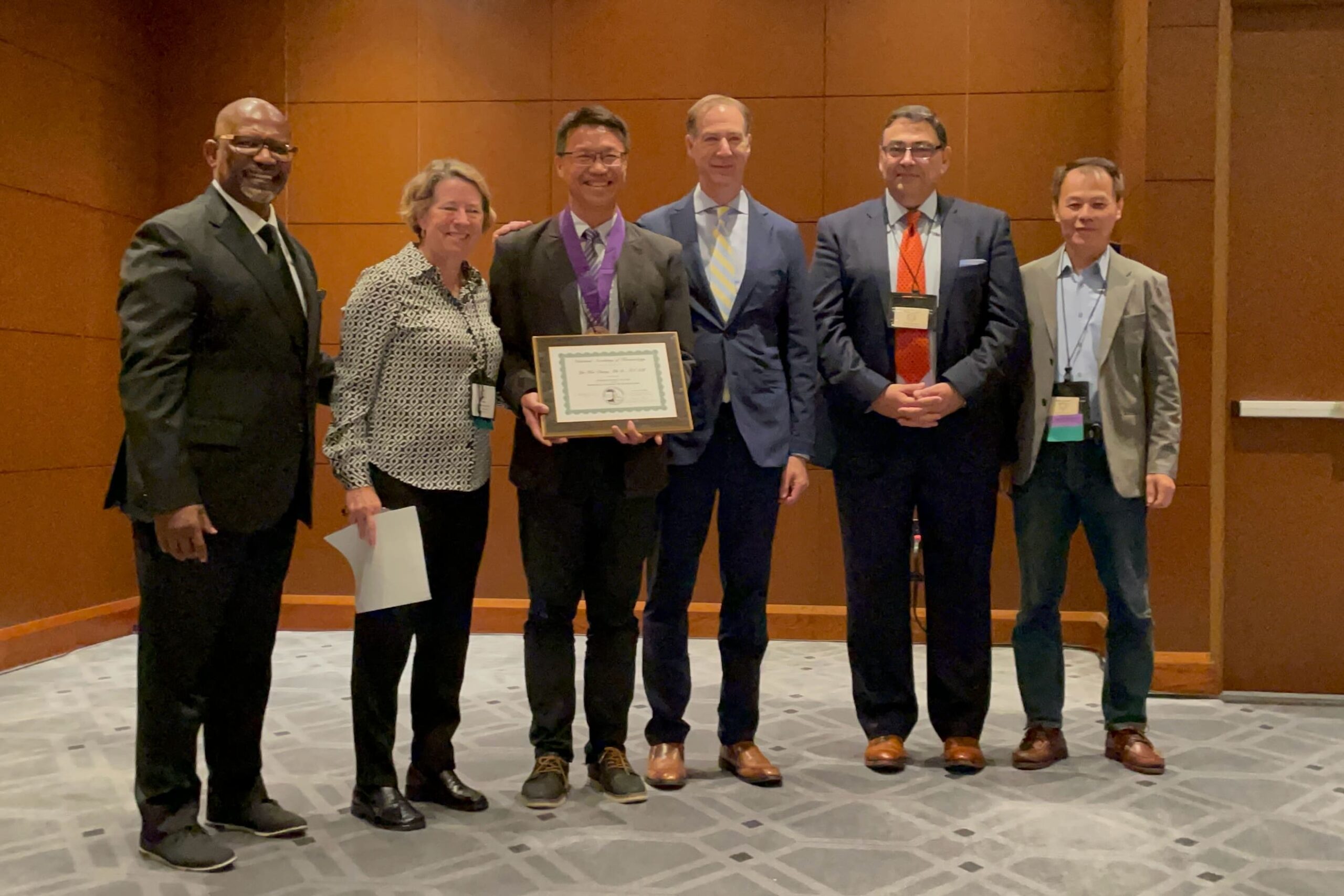
臺灣體育運動界之光!國立臺灣師範大學體育與運動科學系張育愷特聘教授,榮獲2024年美國國家人體運動學院國際院士 (International Fellow, National Academy of Kinesiology, NAK, USA) 殊榮,於9月28日參加在美國明尼蘇達州舉行的頒贈典禮,獲頒院士證書與勳章,今年47歲也是本屆最年輕的院士。
美國國家人體運動學院創立於1926年,為美國體育與運動科學領域最高學術殿堂,截至2023年僅有643位學者獲選院士。2024年共有19位新任院士當選,其中包括3位國際院士。張教授繼承臺灣吳文忠 (1976)、蔡敏忠 (1981)、洪聰敏 (2018) 三位教授的光榮傳統,成為臺灣第4位國際院士。
人體運動學 (Kinesiology) 在美國學術界涵蓋體育、運動科學及人體動作相關領域,自成立以來,主要甄選美籍學者擔任院士,外籍學者則授予國際院士榮譽,象徵其於人體運動科學領域的卓越貢獻與崇高地位。獲此殊榮的學者終身享有院士頭銜,並成為全球體育與運動科學領域的標竿人物。
在2024年第93屆年度學術會議中,院士們共聚一堂,交流人體運動學及其次領域的最新研究成果,並探討未來發展方向,帶來許多啟發與靈感。會議的重頭戲是新任院士的頒授儀式,張教授在提名人Jennifer Etnier院士的引介,以及推薦院士Charles Hillman、Panteleimon Ekkekakis與洪聰敏教授的見證下,由院士主席Samuel Hodge授予證書與勳章,象徵著至高榮耀。
張教授於2008年取得美國北卡羅萊納大學格林斯堡校區哲學博士學位,2018年加入國立臺灣師範大學,創辦身體活動與認知神經科學實驗室,現任體育與運動科學系主任。他的研究領域涵蓋競技與健身運動心理學,特別專注於「認知神經科學」,深入探討「健身運動與認知功能」及「正念與人類表現」等議題,並透過整合運動心理學的知識,為社會大眾、健身愛好者、教練及運動員提供實際應用,達成理論與實務相結合的目標。
張教授目前已在國內外發表超過270篇期刊論文,撰寫10部國際教科書章節,並主導翻譯4本國際學術著作,其研究成果受到國際學術界的肯定與重視。自2021年起,連續四年獲選為全球前2%頂尖科學家,是臺灣在運動科學領域唯一持續上榜的學者。
張教授現任3份國際SCI/SSCI期刊編輯委員,並擔任國內TSSCI期刊的主編,2024年更獲邀擔任《國際競技與健身運動心理學期刊 (International Journal of Sport and Exercise Psychology, IJSEP)》的共同主編,成為臺灣體育運動學界唯一擔任SSCI期刊主編的學者。
張教授的研究成果已被美國聯邦政府納入「身體活動指引諮詢委員科學報告」。面對2020年新冠疫情,他迅速加入德國波茨坦大學主導的101國大型跨國研究計畫,並利用臺灣的大數據進行再分析,研究成果以「Taiwan」為題發表,並於中央流行疫情指揮中心國際記者會中公開。2023年,他將國際最權威的統合分析工具「PRISMA檢核表」翻譯為繁體中文,並成功將「Taiwan」納入PRISMA官方網站,提升臺灣在國際學術界的影響力。
張教授致力於推廣學術知識,積極以科普方式傳播運動與心理健康的研究成果,透過實驗室網站與社交媒體 (如「大腦闆遇上八卦導引」) 擴大研究的社會影響力。他也常受邀至健康醫療網、運動星球、今日新聞與中時電子報等媒體平台,推廣運動對身心與大腦健康的正面影響,讓更多人受惠於科學研究的成果。
產學合作方面,張教授將運動科學、腦科學與東方武學結合,開發了多模式健身運動課程,並於2024年出版科普專書《八卦導引多模式運動全書》,榮登博客來與金石堂書店生活藝術類暢銷排行榜首位。
張教授表示,成為美國國家人體運動學院院士是至高的榮譽,也是對他多年來在體育與運動科學領域所付出努力的肯定。他希望未來能持續透過學術研究,推動體育運動在促進身心健康及提升生活品質上的應用,並將臺灣的研究能量推向國際,為全球健康促進做出更多貢獻。
張教授感性表示:「體育運動不僅是國家健康之本,更改變了我的生命。我願以一生的熱情,透過研究的視角將運動科學的光芒帶給每一個人,讓更多人因運動而獲得幸福、健康的未來。」這句話正是他多年來努力的最佳寫照。(資料來源:體育與運動科學系 / 編輯:胡世澤 / 核稿:鄧麗君)