NSYSU’s consensus camp for first and second-level supervisors in the 108th academic year set “Entering the top 200 international top-notch universities in the world university academic ranking by 2030” as the key points and goals of school development for 2020-2024, with the expectation that by 2024, the proportion of international teachers in the school will reach 15%, and by 2030, it will reach more than 20%, and the proportion of international students will reach 20%, so that the whole school will be fully internationalized.
Currently, the university has 22 all-English degree programs (13 bachelor’s programs, 6 master’s programs, and 3 doctoral programs). Among them, 3 all-English programs have been enrolling students since the 2021 academic year, namely the Department of Electrical Engineering, the Department of Mechanical and Electro-mechanical Engineering, and the Department of Chemistry; in the 2022 academic year, the Department of Physics, the Department of Applied Mathematics, and the Department of Marine Biotechnology and Resources joined, and the College of Management’s International Business Bachelor Program is planned in the overall direction of the college and also began enrolling students in the 2022 academic year.
In the 2023 academic year, the Department of Materials and Optoelectronic Science, the Department of Photonics, the Department of Computer Science and Engineering, and the Department of Biological Sciences will be added. In the 2024 academic year, the Department of Marine Environment and Engineering and the Department of Biomedical Science and Technology will be added.
Teaching Quality
Our school takes “cultivating social elites and leaders” as the overall educational goal, and uses five major strategies to strengthen academic expertise, cultivate international perspectives, nurture humanistic spirit, and pursue macro-creative ideas to cultivate students’ nine basic qualities and core competencies—expression and communication skills, inquiry and critical thinking skills, lifelong learning ability, ethics and social responsibility, aesthetic taste, creativity, global vision, cooperation and leadership skills, and a broad mind and natural feelings.
Scholarships
Entrance Scholarship Top Scholarship: NTD/YR 390,000 awarded for four years in a single grant (renewal subject to academic performance). Applicable to overseas Chinese students only. Outstanding Scholarship: NTD/YR 150,000, awarded for four years in a single grant (renewal subject to academic performance). Applicable to overseas Chinese students only. Scholarship for Encouraging Top and Outstanding Students to Study in AI Industry Chain-Related Departments of Universities and Colleges in Taiwan: Top Scholarship NTD 260,000, Outstanding Scholarship NTD 100,000. Xiwang Overseas Chinese Star Scholarship: NTD 30,000 will be issued once after enrollment.
In-school scholarships: Overseas Chinese Student Needy Scholarship NTD 36,000 per year, Outstanding Malaysian Overseas Chinese Student Scholarship NTD 300,000, Outstanding Hong Kong Student Incentive Program, Taiwan-Hong Kong Education Scholarship HKD 10,000, College of Liberal Arts Overseas Chinese Student Scholarship totaling NTD 100,000, nearly 400 kinds of scholarships and grants inside and outside the school, etc.
24822_4039cc-4d>
24822_d29990-29>
Alumni
馬逸騰
Director of Ma Hu Film Co., Ltd.
Malaysia
Director of Ma Hu Film Co., Ltd., an all-round creator active in Malaysia and the Chinese world, has served as a graphic photographer, songwriter, arranger, record producer and director. His first film “Kepong” and recent work “Lee Chong Wei: The King of Losers” have been well received, and he has successively filmed more high-quality films and short films.
24822_b13e29-45>
24822_0ca1b8-04>
Highlights
Featured courses
Department of Interdisciplinary Studies is a bachelor’s degree department where you can independently build your personal learning blueprint. You can be exposed to the latest issues and trends in technological development, humanities and society, innovative design or entrepreneurship. Through interdisciplinary courses in humanities and arts, social practice, technology, ocean, and business management, you can develop your own customized interdisciplinary professional skills.
The challenges facing the world are becoming more and more complex, and the future will require more and more talents with interdisciplinary and innovative capabilities. NSYSU wants to build the best learning environment for students seeking innovation and interdisciplinary opportunities. This is a professional learning that will award a bachelor’s degree, proving your learning in interdisciplinary expertise. In the process of learning, students will be issue-oriented, and teachers and students will jointly discuss and develop the professional fields and core courses required for the issue. The fields covered can exceed the existing two departments. In the future, depending on the student’s learning expertise, the interdisciplinary bachelor’s degree program can also double major in other departments.

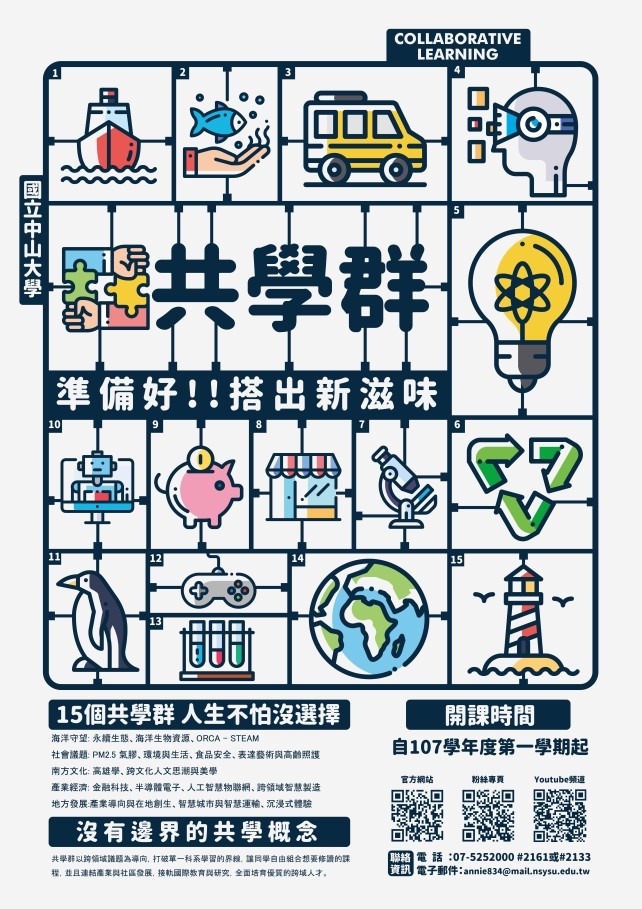
Co-learning Group
The co-learning group combines with Xiwang College to launch a series of “Walking out of Xiwang, Hoping for Kaohsiung” workshops to find the five puzzle pieces of Kaohsiung:
Sustainable Ecology × Marine Resources × Humanistic Aesthetics × Smart City × Community Innovation
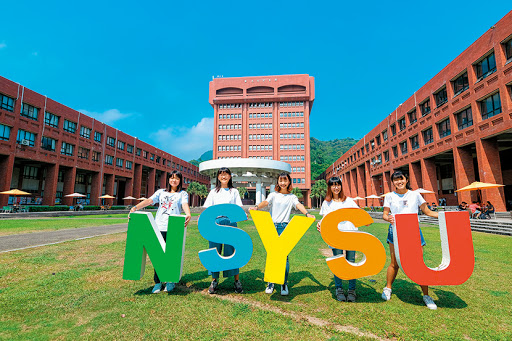
Students who are interested in performing arts, creation, behind-the-scenes work, and marine ecological conservation should not miss NSYSU, which has an invincible sea view and is surrounded by mountains and rivers.
Let you get overseas study and foreign language improvement at once!
I want you to make life turn around at NSYSU.
24822_bcf3c6-6c>
Photos & Videos
Photos
Videos
Introduction to NSYSU (Chinese)
Fun Facts About NSYSU
Interview with the Overseas Chinese Federation of NSYSU
International Carnival of NSYSU
24822_a7d6dd-5c>
Scholarships
Scholarships
Scholarships
24822_c948ea-01>
Scholarship Amount
24822_e59394-89>
Eligibility
24822_c42a2c-9a>
Xiwang Overseas Chinese Star
24822_659b53-3c>
NTD 30,000/time (university), up to NTD 180,000/time (graduate school)
24822_7b4c44-2c>
Freshmen of the university department and graduate school who are admitted in accordance with the Regulations Regarding Study and Counseling Assistance for Overseas Compatriot Students in Taiwan or the Regulations for Hong Kong and Macao Residents Studying in Taiwan of the Ministry of Education.
24822_43a7ef-8c>
Overseas Chinese Student Needy Scholarship
24822_0cdb64-ac>
NTD/YR 36,000/year
24822_bcb4a3-fd>
(1) Overseas Chinese students who are currently enrolled (excluding graduate students and extended students) and Applicants from financially disadvantaged backgrounds [must provide official overseas financial documentation or a certificate of financial hardship]
(2) For students in their second year or above must have a passing grade in the overall average of their academic performance in the previous academic year and an average score of 80 or above in conduct.
(3) Those who live outside the school are not allowed to apply. If the rent is lower than the dormitory fee on campus (a certificate from the landlord is required), they can apply.
24822_120717-cd>
Tuition and Fees (Annual)
College Category
24822_1ad973-ca>
Tuition/Year
24822_99e68f-4f>
College of Engineering Department of Information Management Institute of Undersea Technology Department of Marine Environment and Engineering
24822_f8f991-15>
NTD 57,880 (Bachelor’s Program) NTD 26,880 (Master’s and Doctoral Programs) (Base for Tuition and Miscellaneous Fees) Credit fee is calculated separately, NTD 1,570 per credit
24822_9f329e-68>
College of Science College of Marine Sciences Department of Music Department of Theatre Arts Institute of Arts Managememt and Enterpreneurship
24822_7cb9f1-bf>
NTD 57,420 (Bachelor’s Program) NTD 25,900 (Master’s and Doctoral Programs) (Base for Tuition and Miscellaneous Fees) Credit fee is calculated separately, NTD 1,570 per credit
24822_1a2ff6-32>
College of Management Xiwang College (excluding the Ph.D. Program in Business Administration)
24822_ca5b45-40>
NTD 50,260 (Bachelor’s Program) NTD 22,740 (Master’s and Doctoral Programs) Credit fee is calculated separately, NTD 1,570 per credit
24822_c29c29-ed>
Ph.D. Program in Business Administration
24822_5a1425-ac>
Base for Tuition and Miscellaneous Fees NTD 22,740 Credit fee is calculated separately, NTD 1,570~20,000 per credit Calculated by group
24822_3d30d2-8b>
College of Liberal Arts College of Social Sciences
24822_4b787b-8c>
NTD 49,460 (Bachelor’s Program) NTD 22,360 (Master’s and Doctoral Programs) (Base for Tuition and Miscellaneous Fees) Credit fee is calculated separately, NTD 1,570 per credit
24822_43ff6a-93>
College of Medicine
24822_dccd03-2b>
Tuition and Miscellaneous Fees NTD 142,318 (Post-Baccalaureate Medicine Program) NTD 25,900 (Master’s and Doctoral Programs) (Base for Tuition and Miscellaneous Fees) Credit fee is calculated separately, NTD 1,570 per credit
24822_2afec2-47>
Cost of living (yearly)
Living Expenses: NTD/YR 5,000-10,000
Accommodation Fee: NTD/YR 18,500-19,500
One semester
24822_fd018d-0f>
One academic year
24822_b5a01c-e6>
Other Notes
24822_8fc3a7-22>
NTD 9,800 for the first semester
NTD 8,700 for the second semester
24822_769ec0-80>
NTD 18,500
24822_f783b5-e9>
Building A, Building B, Building C
Four-person room for boys
24822_72dd15-77>
NTD 9,800 for the first semester
NTD 8,700 for the second semester
24822_ff073e-54>
NTD 18,500
24822_14bde1-52>
Building E, Wuling One
Four-person room for girls
24822_9e13eb-6b>
NTD 10,300 for the first semester
NTD 9,200 for the second semester
—Applicable target: Those who have special performance in school, excellent skills, or have been recommended by teachers.
– Application method: Fill in up to 4 applications and submit review materials according to the regulations of each department.
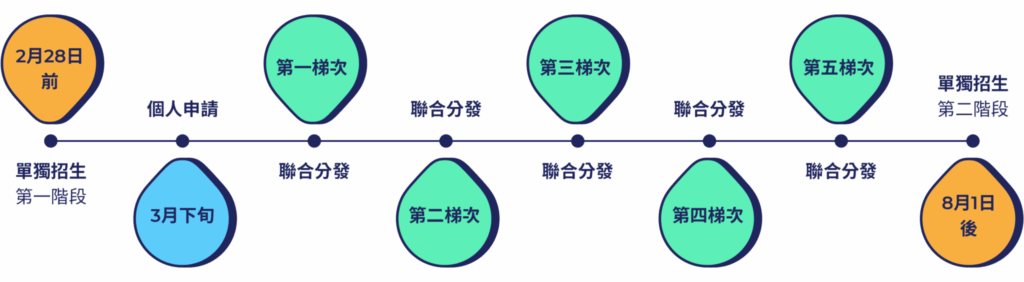
– Distribution principle: Those who pass the review will be distributed according to “qualified order + volunteer order + quota”;
– Those who are not admitted: Those who are not admitted will be directly distributed jointly and distributed in accordance with the applicable brochures.
To expand recruitment opportunities for overseas Chinese and international students, the Ministry of Education has implemented a diverse admissions policy, allowing individual universities to conduct their own Independent Admission. However, to maintain administrative order and prevent double enrollment, the following rules apply: applicants already accepted through the first stage of a university’s Independent Admissions will no longer be processed or placed by the University Entrance Committee For Overseas Compatriot Students Joint Placement system; applicants who have already been placed through the Joint Placement system are ineligible to participate in the second stage of Independent Admissions for results announced after August 1st.
The “Joint Admission” process follows a standardized procedure to ensure fairness across different regions. The University Entrance Committee For Overseas Compatriot Students verifies and converts academic results based on the specific Admissions Brochures of the applicant’s country of residence and the “Detailed Rules for Score Calculation and Placement Operations.”
Admission is granted based on a “merit-based” system following these three primary criteria:
Ranked Scores: Applicants are sorted from highest to lowest based on their converted scores.
Order of Preference: The system identifies the highest-ranked preference available for each student.
Approved Quotas: Placements are limited by the total number of slots allocated to each department by the Ministry of Education.
– Applicable target: Students with outstanding academic/extracurricular, exceptional skills, or those recommended by faculty members.
– Application method: Applicants may fill in up to 4 preferences and submit required application materials according to the specific regulations of each department.
– Placement principles: Qualified applicants will be placed based on their qualification ranking, order of preference, and available quotas.
– Unsuccessful applicants: Those who are not admitted will be automatically transferred to Joint Admission process. Their placement will then be processed according to the regulations set forth in the admission brochure for Indonesia.
– Applicable target: Students with outstanding academic/extracurricular, exceptional skills, or those recommended by faculty members.
– Application method: Applicants may fill in up to 4 preferences and submit required application materials according to the specific regulations of each department.
– Placement principles: Qualified applicants will be placed based on their qualification ranking, order of preference, and available quotas.
– Unsuccessful applicants: Those who are not admitted will be automatically transferred to Joint Admission process. Their placement will then be processed according to the regulations set forth in the admission brochure for Macau.
– Applicable target: Students with outstanding academic/extracurricular, exceptional skills, or those recommended by faculty members.
– Application method: Applicants may fill in up to 4 preferences and submit required application materials according to the specific regulations of each department.
– Placement principles: Qualified applicants will be placed based on their qualification ranking, order of preference, and available quotas.
– Unsuccessful applicants: Those who are not admitted will be automatically transferred to Joint Admission process. Their placement will then be processed according to the regulations set forth in the admission brochure for Myanmar.
– Applicable target: Students with outstanding academic/extracurricular, exceptional skills, or those recommended by faculty members.
– Application method: Applicants may fill in up to 4 preferences and submit required application materials according to the specific regulations of each department.
– Placement principles: Qualified applicants will be placed based on their qualification ranking, order of preference, and available quotas.
– Unsuccessful applicants: Those who are not admitted will be automatically transferred to Joint Admission process. Their placement will then be processed according to the regulations set forth in the admission brochure for Vietnam.
– Applicable target: Students with outstanding academic/extracurricular, exceptional skills, or those recommended by faculty members.
– Application method: Applicants may fill in up to 4 preferences and submit required application materials according to the specific regulations of each department.
– Placement principles: Qualified applicants will be placed based on their qualification ranking, order of preference, and available quotas.
– Unsuccessful applicants: Those who are not admitted will be automatically transferred to Joint Admission process. Their placement will then be processed according to the regulations set forth in the admission brochure for Hong Kong.
—Applicable target: Those who have special performance in school, excellent skills, or have been recommended by teachers.
– Application method: Fill in up to 4 applications and submit review materials according to the regulations of each department.
– Distribution principle: Those who pass the review will be distributed according to “qualified order + volunteer order + quota”;
– Those who are not admitted: Those who are not admitted will be directly distributed jointly and distributed in accordance with the applicable brochures of Malaysia.
The “Joint Admission” system for students in Myanmar primarily relies on the “Subject Competency Test” organized by the University Entrance Committee For Overseas Compatriot Students. Placements are determined based on the test results and the applicant’s listed preferences.
School Types and Evaluation Criteria
School or Program Type
23449_dd4280-79>
Accepted Evaluation Method
23449_080e30-3c>
6-Year Chinese High Schools
23449_1d75f6-7a>
Subject Competency Test
23449_ce5e9d-b8>
Myanmar Schools (New/Old System)
23449_325f52-43>
Subject Competency Test
23449_72612c-fb>
International Schools
23449_9cf7c4-27>
Subject competency test;
(Note: Applicants holding an ROC passport with an Overseas Chinese Identity Endorsement may alternatively apply under the “Application Brochure for General Regions.”)
Joint Admission in Vietnam is categorized into two tracks: Local High School Graduates and Overseas Taiwan School Graduates. Each track follows specific regulations based on their respective admission brochures:
Joint Distribution
23445_1873f0-00>
School Type
23445_ed360a-93>
Evaluation Method
23445_9c7b52-8a>
Admission Brochure
23445_7154d8-59>
Phase 2
23445_0c5d7a-74>
Local high school graduates
23445_c73b18-59>
Evaluation of transcripts from the last three years of high school, SAT Subject Test scores, A-Level diplomas, or IBDP (International Baccalaureate) results.
23445_c28b6b-73>
Brochures for general exam-free regions
23445_679b90-f5>
Phase 3
23445_fbeedb-ce>
Overseas Taiwan school graduates
23445_28ae8d-eb>
Participation in Subject Competency Tests.
23445_df8368-18>
Brochure for high school graduates of overseas Taiwan schools
“Joint distribution” process determines admission based on the subjects and scores specified in the brochure, the admission quotas of individual departments, and the applicant’s listed preferences. As many prestigious programs—including Medicine and Veterinary Medicine—primarily recruit through this channel, eligible students are strongly encouraged to utilize this pathway.
Recognized Diplomas
School Type
23456_71932b-f4>
Accepted Diplomas / Standardized Tests
23456_a6faad-65>
Hong Kong Chinese & English High Schoolsl (including international schools)
23456_aea035-43>
Hong Kong Diploma of Secondary Education Examination
Hong Kong Advanced Level Examination
SAT Subject Test scores
Overseas A-Level results
International Baccalaureate Diploma Programme (IBDP) results
23456_631154-83>
High Schools Outside Hong Kong (Chinese & English Medium)
23456_0e80ca-ed>
SAT Subject Test scores
Overseas A-Level results
International Baccalaureate Diploma Programme (IBDP) results
Transcripts from the last 3 years of High School
Hong Kong Diploma of Secondary Education Examination
23456_48c6d3-bb>
For specific required subjects for each diploma type, please refer to the latest annual University Entrance Committee For Overseas Compatriot Students admission brochures or the dedicated Hong Kong Section on the official website.
“Joint distribution” system categorizes university departments into three categories: the first category (liberal arts, law, business, education, etc.), the second category (science, engineering, etc.), and the third category (biology, medicine, agriculture, etc.). Applicants can fill in up to 70 preferences in order of priority. Please refer to the table below to identify the correct admission brochure and evaluation criteria based on your high school type:
Application Phase – High School Type
23428_356330-1d>
Enrollment brochure – Evaluation Criteria
23428_0d2cda-d8>
Phase 1
Chinese Independent High School Graduates
23428_8e328f-34>
Applicable brochure for Malaysia:
Unified Examination Certificate (UEC) results
23428_3cfb90-81>
Phase 2
International School Graduates
23428_51e9f7-af>
Applicable brochures for general exam-free regions:
Transcripts from the last 3 years of high school
SAT Subject Test scores
IBDP scores
A-Level results
23428_74f29c-68>
Phase 3
Overseas Taiwan School Graduates
23428_ad7b78-d5>
Applicable brochure for overseas Taiwan school graduates:
Participation in the Subject Competency Test
23428_1dc9a4-1f>
Phase 5
SMJK, SMK, International School, or Independent High School Graduates
23428_c30b62-64>
Applicable brochure for Malaysia:
STPM results
A-Level results
SPM results
O Level results
23428_78ce86-b8>
Joint Admission (Indonesia)
Applicants may choose to join the “Indonesian Preparatory Program”. Upon completion of the program, students take an exit examination covering three subjects: Chinese, English, and Mathematics (regardless of the chosen academic track).
The results of this exit examination serve as the primary score for Joint Placement. Students are then placed into universities based on their score ranking (from highest to lowest), their listed preferences, and the available quotas approved by the Ministry of Education.
Application category
Joint distribution of subjects (For students who completed their high school education in Indonesia)