Dharma Drum Institute of Liberal Arts
About the University
校園資訊
Information
Address
No. 700, Dafagu Road, Xihu Village, Jinshan District, New Taipei City, 208303, Taiwan
Tuition and Accommodation Fees
Tuition and fees: NTD/YR 58,000 (Bachelor’s program)
Tuition and fees: NTD/YR 59,800 (Master’s and Doctoral programs)
Accommodation fee: NTD/YR 30,000 [International students who meet the requirements can enjoy a 25%~100% reduction in accommodation fees]
Living expenses: NTD/YR 80,000~130,000
※Accommodation deposit: NTD 1,000 (refundable upon check-out)
Social Media
DILA, Dharma Drum Institute of Liberal Arts
Contact Information
Introduction
Teaching quality and academic prestige
Department of Buddhist Studies Features:
The Department of Buddhist Studies employs more than 20 full-time and part-time professors who graduated from renowned universities in Taiwan and abroad, all specializing in Buddhist studies. The department offers a comprehensive and in-depth curriculum that integrates both Buddhist scholarship and practice.
Building upon over 30 years of academic experience and resources from the Institute of Chung-Hwa Buddhist Studies, the Dharma Drum Institute of Liberal Arts – Department of Buddhist Studies has developed strong foundations in teaching, research, and library collections, and is widely recognized as one of the leading Buddhist education institutions in Taiwan and internationally.
Features of the Master’s Program in Life Education:
1. Realize the wisdom of life and create a pattern for life
2. Life contemplation and reflection
3. Cross-cultural and diverse perspectives
4. Settle the body and mind of oneself and others
Features of the Master’s Program in Social Enterprise and Innovation:
1. Taking the Dharma Drum Mountain’s concept of spiritual environmental protection as its core, it is committed to building a Pure Land in the world
2. Cultivate social interdisciplinary issue advocacy, and attach importance to community and environmental sustainability and social enterprise expertise
3. Through self-reflection and self-awareness, cultivate inner energy, expand resource links and enhance public welfare action capabilities
4. Curriculum design that meets social needs, combining theory and practice
Graduate Path
Department of Buddhist Studies Features:
1. Further studies: Graduate schools at universities in Taiwan and abroad
2. Research: writing books and translating Buddhist scriptures
3. Buddhist religious teachers: clinical religious teachers, promotion, and meditation
4. Cultural and educational undertakings: publishing and editing, writers
5. Dharma Drum Mountain system: Schools, foundations, the Six Ethics Dharma Propagation Group, Dharma Drum Culture, and the Sheng Yen Academy
6. Charitable organizations
Master’s Program in Life Education:
Graduates of DILA build upon their original undergraduate professional training and further develop distinct competitive advantages through the Institute’s interdisciplinary programs, integrated learning platforms, and diverse learning models such as research center participation and talent cultivation initiatives.
Master’s Program in Social Enterprise and Innovation:
Graduates can invest in social enterprise management, innovative entrepreneurship, non-profit organization management, corporate sustainability and social responsibility departments, apply for public officials, and continue their studies.
International Exchange and Cooperation
1. Regularly subsidize students to study abroad for credits and internships every year
2. The Institute welcomes students from other domestic and international universities to study and conduct research on campus, promoting multicultural exchange between local students and international students.
3. The Institute offers visiting scholar and visiting researcher programs, accepting outstanding scholars and doctoral students from Taiwan and abroad to conduct academic research and deliver lectures.
4. In terms of academic collaboration, the Institute integrates its rich academic research resources with a curriculum framework centered on the core value of spiritual environmentalism, creating a diverse and comprehensive research and learning environment that combines Buddhist studies and secular studies. The Institute also cooperates with numerous overseas institutions on various projects and organizes international academic activities.
Exclusive Scholarship
1. The Department of Buddhist Studies provides generous scholarships. Students with an overall average of 85 points in the semester and conduct grades will be awarded full tuition (monks and nuns will be awarded tuition and miscellaneous fees). There are also subsidies for overseas study expenses and scholarships for other outstanding academic achievements and thesis writing projects
2. Scholarships for Master’s Programs in Life Education, Social Enterprise and Innovation: Monks and nuns with an average of 85 points in semester and conduct grades will be awarded tuition and miscellaneous fees
Support Mechanism for Hong Kong Students
The Academic Affairs Section, Extracurricular Activities and Life Counseling Section, and International Affairs Section are jointly responsible for matters related to overseas Chinese student counseling, so that students can study with peace of mind, such as: overseas Chinese student academic counseling, scholarship applications, and campus service dedication applications, health services and insurance, etc.
The school’s International Affairs Section is responsible for assisting in handling visa matters.
Library and Information Center
The school’s Library and Information Center is divided into the Main Library and the Liying Library. The Main Library mainly collects Buddhist books and periodicals, including more than 80 sets of Tripitaka in Chinese, Tibetan, Manchu, Sanskrit, Pali, Japanese, English, Thai, Burmese, Cambodian, and Dai, making it a large-scale Buddhist library in Taiwan. It is currently continuing to expand academic works on Buddhist studies in Chinese, Japanese, and European languages.
The Li-Ying Building mainly collects humanities and social sciences books, and is a comprehensive collection to support the classroom teaching and research of teachers and students in the school’s humanities and social sciences.
The Digital Archives Group under the library is responsible for the digitization, production and application of Buddhist classics, the establishment of Buddhist research databases, and the research and construction of Buddhist information courses in cooperation with the school’s Buddhist Information Credit Program, in order to achieve the cultivation of new generation talents and the inheritance of experience.
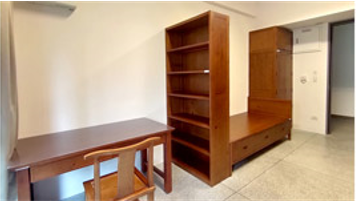
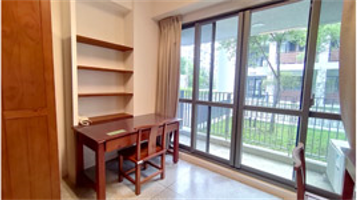
The dormitory provides
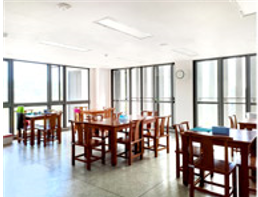
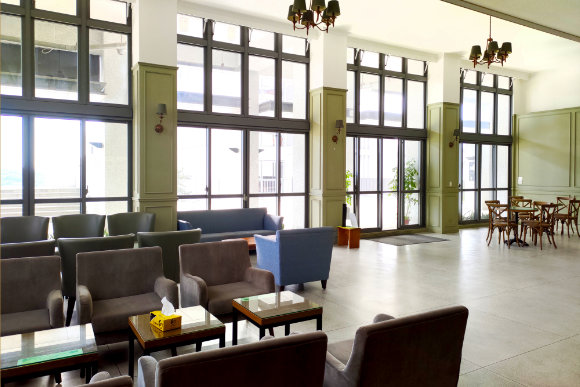
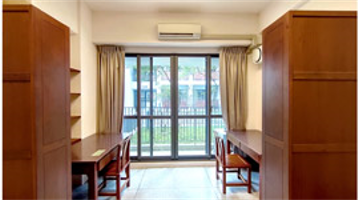
The school provides student dormitories for international students, mainly double rooms.
Alumni
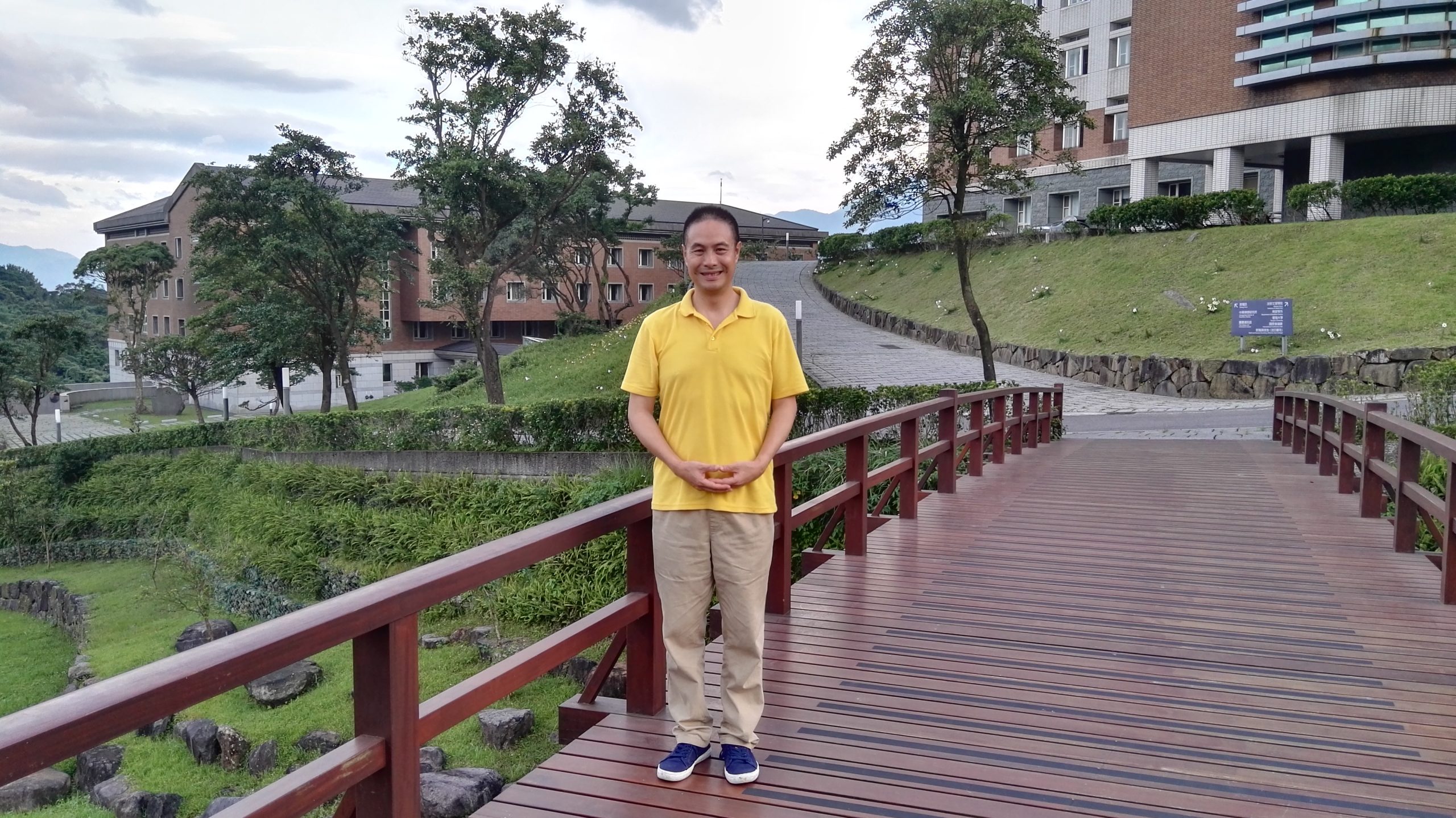
盧致新
Advanced Doctoral Student, Department of Buddhist Studies
Hong Kong
I am a student from Hong Kong. After graduating with a Ph.D. in Psychology, I have been working in society for many years and continue to learn.
When learning and using psychology to serve the public, I found that psychology is very useful for solving people’s psychological problems, but ultimately, it cannot completely transcend people from psychological problems.
Later, I came into contact with Buddhist studies, which brightened my eyes. After a period of preliminary study of Buddhist studies, I realized that if psychology and other “worldly studies” are rooted in the soil of Buddhist studies, “worldly studies” can radiate infinite vitality and power, and psychology can also become a convenient method to help people completely transcend psychological problems.
In order to further my studies in Buddhist studies, I came to Taiwan Dharma Drum Institute of Liberal Arts in 2019 to study in the doctoral program of the Department of Buddhist Studies.
I actually spent three or four years investigating and understanding the Buddhist studies departments of various schools in Taiwan before finally choosing Dharma Drum Institute of Liberal Arts.
The training goal of the Dharma Drum Department of Buddhist Studies is “on the one hand, to cultivate outstanding interdisciplinary Buddhist education and research talents, and on the other hand, to cultivate Buddhist professionals with the goal of caring for the mind and purifying society.”
The work I have been doing is “caring for the mind and purifying society.” I increasingly realize the important value of Buddhism in this regard, and for Buddhism to play a role, it needs in-depth research on Buddhist studies.
The Dharma Drum Department of Buddhist Studies has a complete Buddhist studies curriculum, an excellent faculty, solid training in literature languages (Sanskrit, Pali, Tibetan, etc.), internationally renowned Buddhist information technology, exchanges with the international academic community, and a rich collection of books, which can fully meet my learning needs.
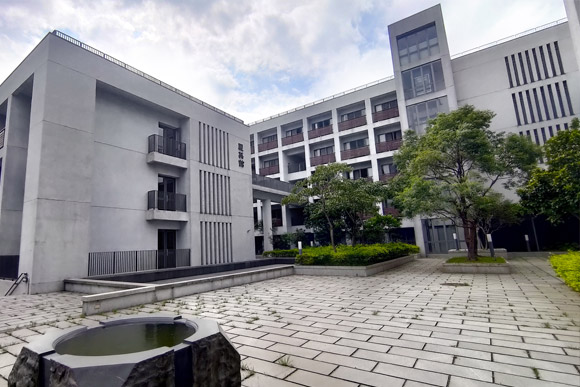
What makes me feel refreshed is that our school is located on Dharma Drum Mountain in Jinshan District, with beautiful scenery. The distance from the city is neither too far nor too close, which is very suitable for cultivating the body and mind and in-depth learning of professional knowledge. Although the school area is not large, the facilities are very complete, with a standard gymnasium (“Yang Sheng Hall”), and the campus landscape is very quiet and elegant.
The teachers and students of the school are very kind and friendly, and we are like a big family. Half of the students in our school are from other countries, and the degree of internationalization is very high. You can meet friends from different nationalities, understand different cultures, and broaden your horizons.
In addition, the education method in Taiwan is different from that in Hong Kong. Teachers strongly encourage students to express their opinions; our school also has small class teaching, so there is great teacher-student interaction in class. If you want to master solid Buddhist knowledge and hope to apply Buddhism in your life and interpersonal relationships;
Or you want to integrate Buddhism with worldly knowledge to serve society well; or you want to learn the perfect combination of Buddhist studies and modern digital technology, so that you have a very special career plan;
Or you want to study in Taiwan to prepare for further studies internationally… I invite you to learn more about our school, and I also invite you to study at our school and share a good time.
岑嘉宏
Advanced Student, Master’s Program in Environment and Development
Hong Kong
Three years have really passed quickly. I remember when I chose to come to Dharma Drum Institute of Liberal Arts, I mainly wanted to settle my body and mind and also sort out my work experience in Hong Kong in the past five or six years in the field of food and agriculture education.
Studying in the Master’s Program in Environment and Development has given me a broader perspective on thinking about environmental issues, and it can also be connected to real life, such as walking into rural communities in Satoyama or ecological conservation areas, which also allows me to have a different level of understanding of the meaning of food and agriculture education.
During the process of my thesis research, the teachers in the program provided support and different opinions, which gave me a deeper understanding of adult food and agriculture education courses in Taiwan’s community universities, and combined with the learning foundation to sort out new insights.
In general, I have really learned a lot in these three years. In addition to knowledge about environmental conservation and related policies, the cleansing of the school’s quiet and natural environment, coupled with cross-program learning opportunities, has allowed me to learn to find peace in the midst of disturbances, to learn to let go but not give up, and to learn to know myself better and then try to dissolve myself. In fact, each of us is a member of nature, no different from grass and ants.
Thank you again to every teacher, senior and classmate I met on this learning journey, and especially thank you to the teachers in our Environment and Development Program for their guidance and inspiration.
Student Cen Jiahong graduated in July 2022 and won the 2022 Academic Thesis Award from the Taiwan Agricultural Extension Society in November.
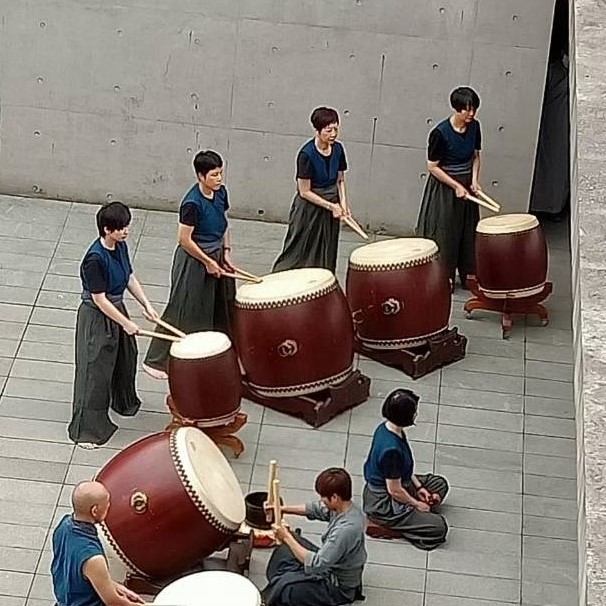
陳婉芳
Bachelor’s Program in Buddhist Studies
Hong Kong
A Gift to Myself Since coming to Taiwan in 2019, it has been the fourth year and the last year of the Bachelor’s Program in Buddhist Studies in the blink of an eye. In a very fulfilling life, I have found the joy of learning and the nourishment of life. I can never catch up with the progress of learning in the limited time.
There is everything here. When various learning and activities fill up the time, you feel that there are many things you want to do, but not enough time. The four-year curriculum includes both practice and understanding. I still remember when I first found the course outline information online, I felt an unspeakable joy.
There is no such comprehensive Buddhist studies curriculum in Hong Kong that focuses on spiritual environmental protection and emphasizes both understanding and practice. Most of the courses in Hong Kong focus on academic pursuits, and there is no combination of temple and school for understanding and practice.
Coming here, I also feel that this is the most correct decision in my life, to correct and fill in the gaps on the road of faith, understanding, practice, and realization, and return to the original intention of the Buddha.
Here, the fixed practice of practice includes participating in the morning/evening class in the main hall and the morning/evening joint practice of meditation in the meditation hall, as well as holding Chan Five and Chan Seven at the beginning of the semester. Since you have come to the Dharma Drum Mountain meditation dojo, you must not miss the opportunity to learn meditation.
The courses from the first to third years teach different meditation methods to help students practice collecting their body and mind, from scattered mind to unified mind to no mind.
The understanding courses in the four years range from shallow to deep, from classical meaning, interpretation of Chinese original texts/philology, Buddhist history (Han, Indian, Tibetan), Buddhist ethics and precepts, Buddhist social practice, Buddhist culture and art, Buddhist information, to general education subjects, everything is available to develop students’ literacy and practical ability.
In terms of language, for the understanding of the original Buddhist texts, you can also choose to learn Sanskrit, Pali, Tibetan, as well as Japanese and English. It depends on how you arrange to complete the required credits in four years. In addition, there are master’s and doctoral programs available to open another door for students who intend to pursue further studies.
In addition to the Department of Buddhist Studies, you can also choose the Master of Life Education or the Master of Social Enterprise and Innovation in the College of Humanities and Social Sciences.
There are treasures everywhere on the mountain. In addition to the teachers who teach carefully, who are the best in their academic fields, the school’s two libraries are also treasures. The main library has the richest collection of Buddhist books in Taiwan. It is also a pleasure to browse the Tripitaka; and the other library collects books other than Buddhism, and the collection is more than what we need for learning.
The activities of various clubs cover all kinds of interests, both dynamic and static. From calligraphy and painting, music (guitar, piano, guzheng, jazz drums, Chinese drums), sports (fitness, badminton, skateboarding), coffee making, etc. You don’t have to worry about not finding a way to adjust in busy learning.
Don’t hesitate, come here to study, it’s like giving yourself a gift!
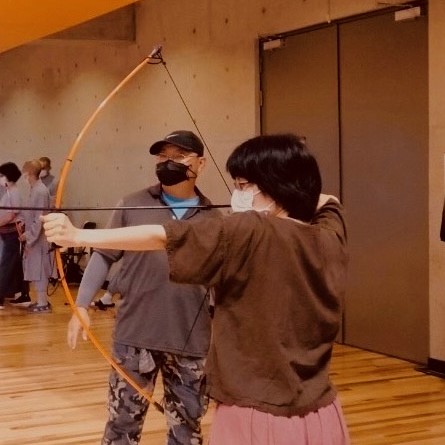
翁曉娟
Bachelor’s Program in Buddhist Studies
Hong Kong
The curriculum feature of the Department of Buddhist Studies at Dharma Drum Institute of Liberal Arts is “emphasis on both understanding and practice.” We have both academic courses in Buddhist studies, worldly studies, and general education, as well as practice courses with Buddhist characteristics such as morning and evening classes, meditation classes, and chanting classes.
The learning in the past three years has made me feel the diversity of Buddhist studies and Buddhism. Buddhism is a religion, but it also has the perspectives of philosophy, science, psychology, and sociology.
We learn about the forms and meanings of Buddhism in ancient and modern society from different fields such as Buddhist history, meaning, literature, figures, and art. It has inextricable relationships with the societies and cultures of India, Southeast Asia, China, and Japan.
The interaction between Buddhist studies and worldly studies also makes me think about the role of Buddhism in modern society. We can also learn Buddhist languages such as Sanskrit, Pali, and Tibetan.
The school life outside the classroom is also very diverse and lively. Various academic seminars, clubs, or school-organized activities allow us to participate freely. I learned how to hand-brew coffee, experienced tea meditation, flower arrangement, and participated in the planning of club activities, the work in the kitchen, and the Dharma Drum Mountain Dharma assembly, which added a lot of color to university life.
In addition, the natural scenery of the campus is really beautiful. I like to watch the ever-changing clouds in the sky and listen to the sounds of birds, insects, wind, rain, and water in different seasons.
My deepest experience is that “emphasis on both understanding and practice” is not just about the accumulation of knowledge, but also requires the practice of Buddhist knowledge learned through hearing and learning in daily life, and step by step correcting one’s own biased body, speech, and mind according to right knowledge and right view, which is also for us who are in a restless era to find the power of peace of mind.
All kinds of problems in the world seem to be inseparable from people’s good and evil minds. Buddhist learning, thinking, and cultivation are all methods of training the mind, such as the school’s meditation course, which is a method of cultivating the mind that combines theory and practice. Therefore, whether it is for liberation from life and death or for settling down, learning Buddhist studies and life education at Dharma Drum Institute of Liberal Arts is also a good starting point for reflecting on one’s life.
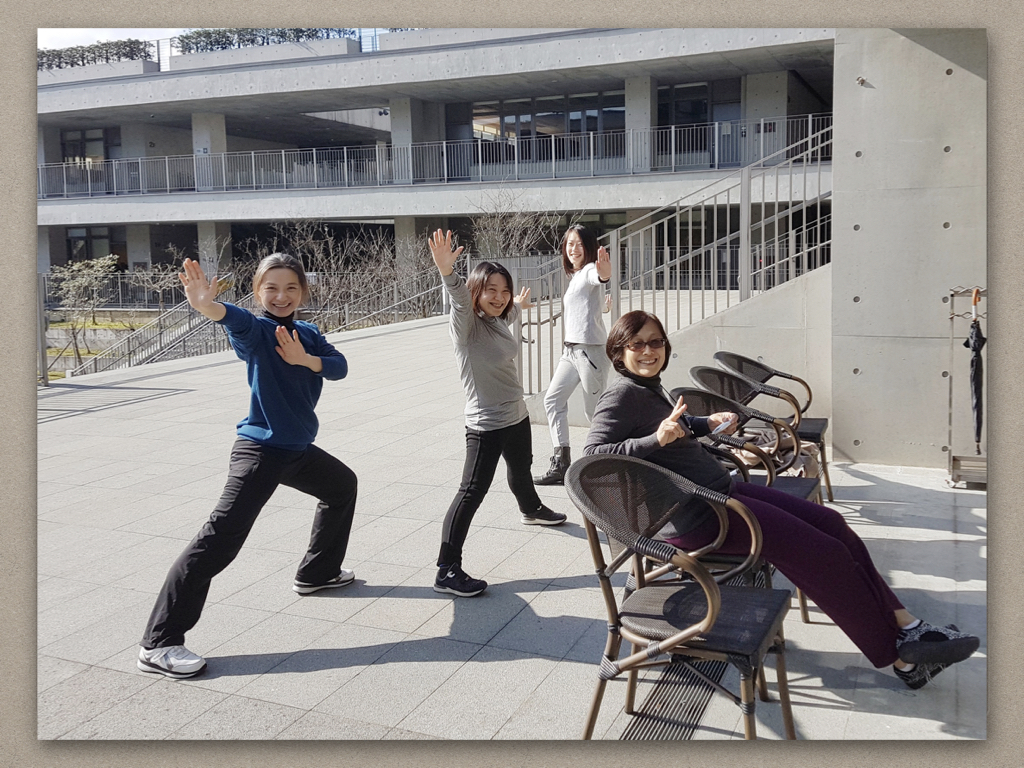
劉倩青
Advanced Student, Master’s Program in Life Education
Macau
When people become more and more mature, and find that the things they used to pursue become less important, I began to want to adjust my life. In a meditation study in Taiwan, I discovered the Master’s Program in Life Education at Dharma Drum Institute of Liberal Arts. I want to study life education, and famous universities in Taiwan also offer this course.
I have worked in a university for more than ten years, and my confidence and views on academics have gradually changed. At this moment, I want to learn from a group of people who are truly practicing, which is more important than the academic content itself. Therefore, I chose Dharma Drum Institute of Liberal Arts, a place with a strong Buddhist atmosphere and a large number of people who are studying diligently, a place full of Zen and poetry.
Here, I regained my childlike innocence and learned freely. Most of my classmates have rich academic experience and insights into life. More importantly, they have a strong desire to learn and share. Meeting them is a great gain for me.
Meeting teachers who are consistent in their words and deeds makes me full of hope and energy for life. I started a new life in Taiwan in the simplest way, because I liked it because of in-depth understanding (there are many social courses in the curriculum), and because of a good support network, I easily applied for immigration and started a new life in Taiwan.
Encourage those who want to change but are waiting to take action to consider this path.
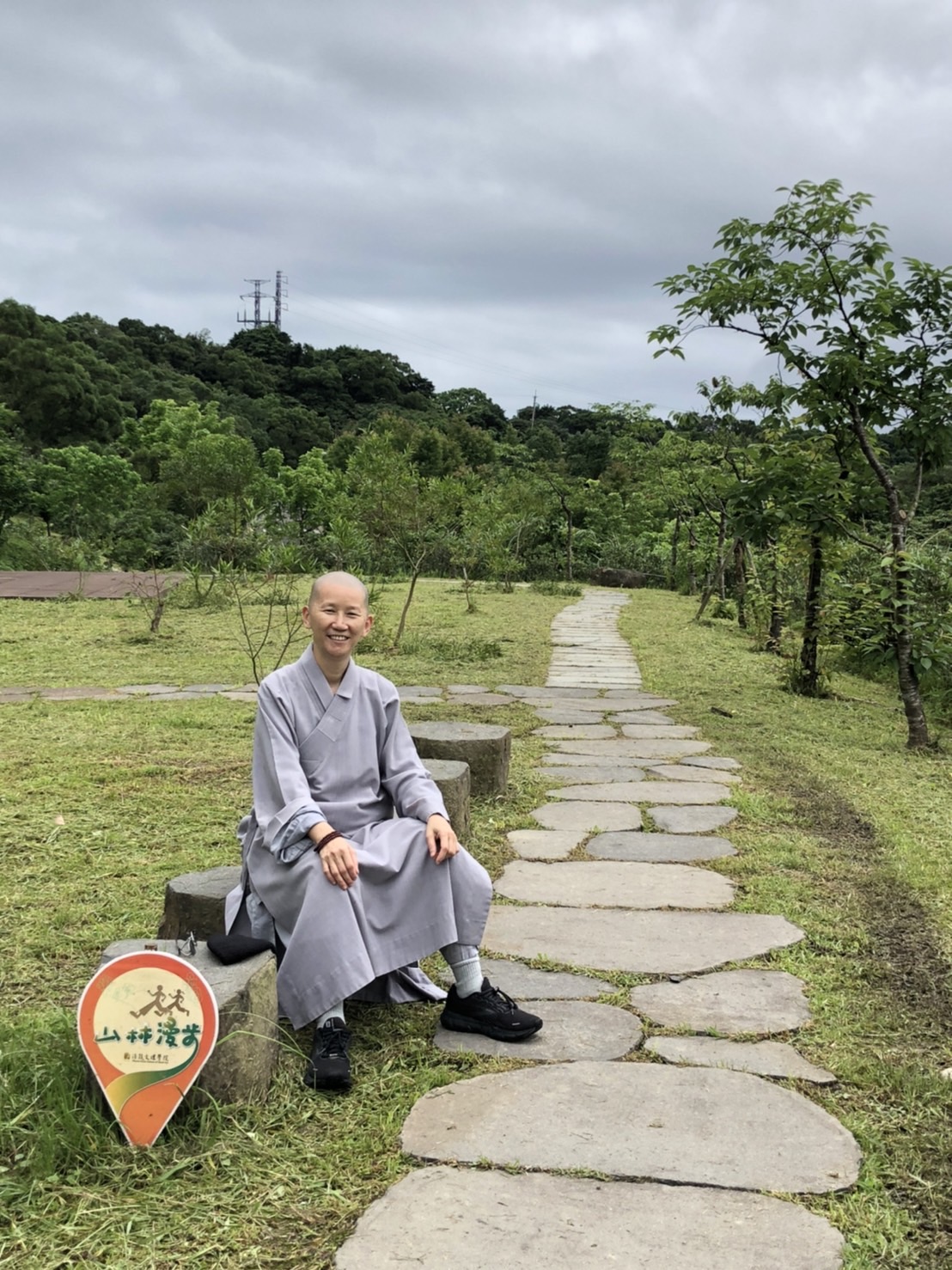
釋常慧
Advanced Student, Master’s Program in Life Education
Malaysia
If I hadn’t come to the Life Education Program, I wouldn’t have known that there were so many misunderstandings in my life.
Coming to the Life Education Program, I slowly embarked on the path of exploring the deep meaning of life through different courses. Life is not necessarily exactly as we remember it. Through in-depth understanding of the life philosophy of Lao Zhuang and Su Shi, coupled with meditation, self-awareness, and life and death issues that meet the mind, after two years, I feel that life has a kind of clarity and understanding like seeing the sun after the clouds have cleared.
Malaysia is a tropical country, and it often expresses ideas and needs in a very direct and simple way. If you can learn more subtle thinking methods and self-awareness exercises, you can really understand the deep meaning of the inner life of overseas Chinese immigrants.
I feel that after studying the Life Education Program, I have a more multi-faceted view and understanding of the land of Malaysia, and I am also more curious about its more unknown aspects.
I believe that continuing to learn will allow me to bring more abilities to give back to my homeland.
Highlights
Featured courses
The Department of Buddhist Studies provides complete Buddhist language courses from beginner to advanced, including Buddhist Chinese, Sanskrit, Pali, and Tibetan. In addition to Buddhist theory courses, the Department of Buddhist Studies has a wealth of Buddhist practice and interdisciplinary (life education, social enterprise, etc.) courses, including meditation, Buddhist rituals, Buddhist art, Buddhist psychological counseling, Buddhist information and digital humanities, etc.
Interdisciplinary curriculum design
The Master’s Program in Social Enterprise and Innovation cultivates well-informed professionals with spiritual environmental protection, with expertise in interdisciplinary social innovation management, in-depth community issue advocacy and public welfare practice, and ecological literacy and environmental sustainability. The curriculum directions include: spiritual environmental protection and sustainable development, social enterprise innovation and entrepreneurship, community revitalization theory and practice, and natural conservation and environmental ethics.
Overseas study
The University offers generous scholarships to select students for overseas exchange programs, study-abroad opportunities, and internships, with the aim of broadening students’ international perspectives, strengthening their academic research capabilities, and cultivating independence as well as problem-solving and decision-making skills.
Website for student research results reports over the years: http://oia.dila.edu.tw/?page_id=339
Cultivate interdisciplinary talents
The curriculum planning of the Master’s Program in Life Education covers physical, mental and spiritual growth, and also includes the study and training of related religious fields, so students can also develop their future careers in the religious field. DILA was founded by Dharma Drum Mountain, and has long interacted with other religions, emphasizing the correspondence of the essence of life.
Regardless of whether students have a Buddhist or other religious background, students in this program can use their internalized religious literacy to work in meditation (practice) centers, social charities, cultural education, community development, international aid and other units founded by various religions, especially during the study stage, they can plan their careers according to their interests, backgrounds and abilities, and combine domestic and foreign internship opportunities to make the most complete preparations.
Reference for employment institutions:
1. Research talents in research institutions related to cross-Eastern and Western cultures and interdisciplinary subjects
2. Cultural industry
3. Non-governmental organizations and corporate organizations
4. Government unit administrative system
5. Public and private educational institutions
6. Counseling and social service undertakings
Cultivate reflection and contemplation on life
Master’s Program in Life Education: Through the development of courses such as life and death issues, community applications, and diverse counseling theories and practices, students are expected to understand deep life issues, transform themselves and establish positive thinking patterns, and provide broad and profound influence in formal and non-formal education fields.
Reconstruction of Life Education Relationships
Master’s Program in Life Education: Starting from learning the relationship between people and themselves, conduct contemplation and reflection on inner life issues to deepen self-awareness and value reflection, and then develop multi-faceted thinking on relationships through ethical issues, covering multicultural cognition to enhance cross-cultural perspectives.
Practical ability of life education
Master’s Program in Life Education: Taking courses such as “Special Topics in Counseling and Guidance” and “Action Research Topics” as advanced courses, and at the same time, through meditation learning, more profound reflection ability, and from the understanding of multiculturalism to cross-cultural integration, lay the foundation for entering the practice field.
Social care ability
Master’s Program in Life Education: Through the course “Life Care Practice(including practicum)” and “Hospice and Elderly Care Topics”, implement theory and support students’ ability to participate in group coordination and development in the future.
Departments
School Departments and Programs
Dharma Drum Institute of Liberal Arts
Graduate School of Humanities and Social Sciences
Photos & Videos
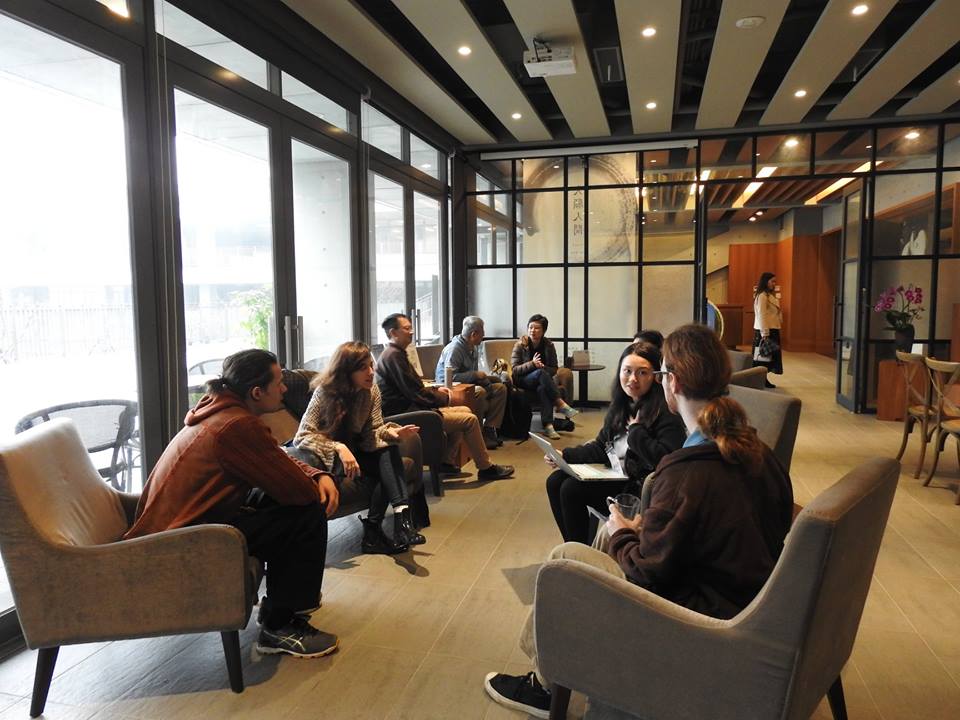
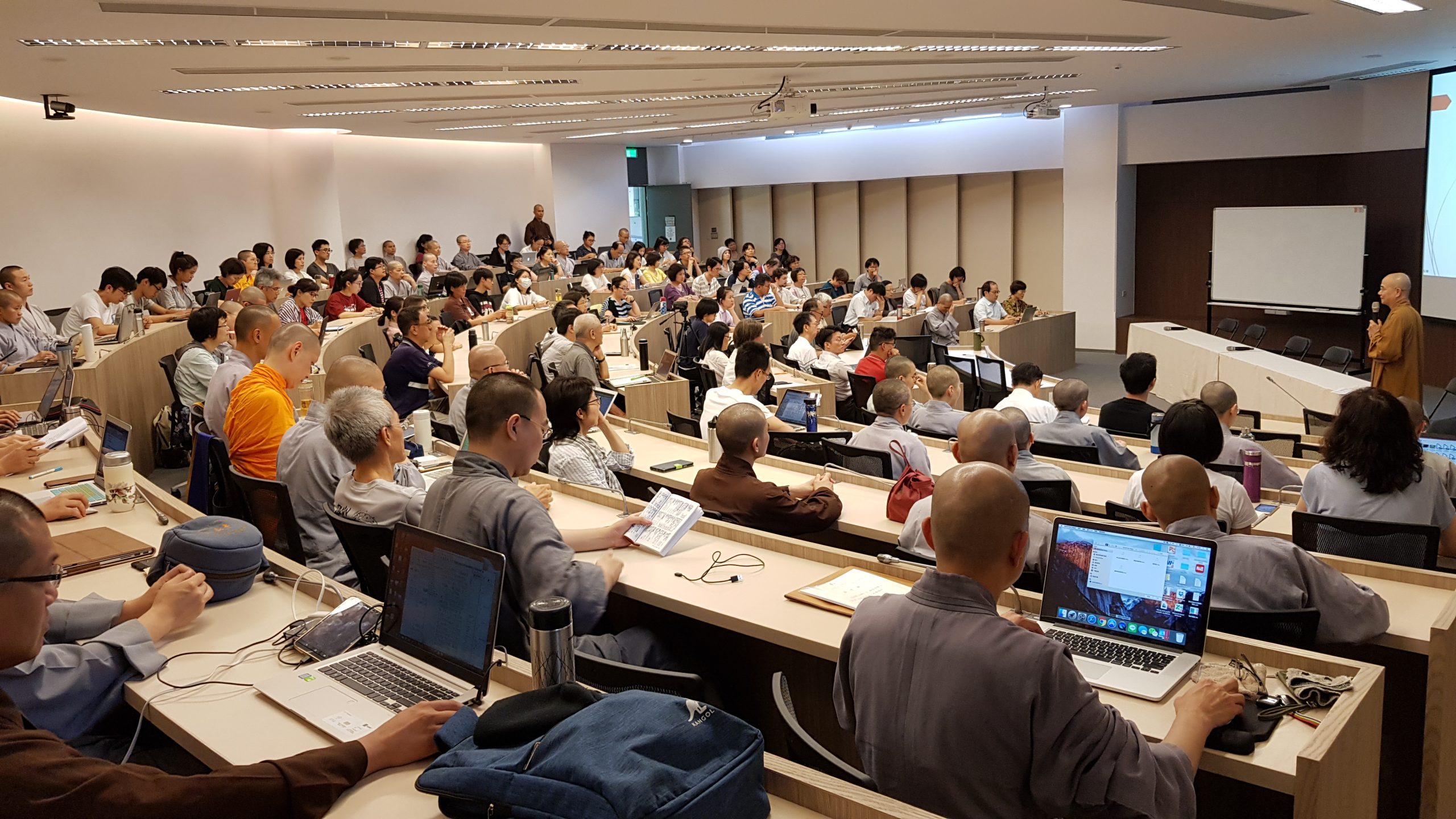
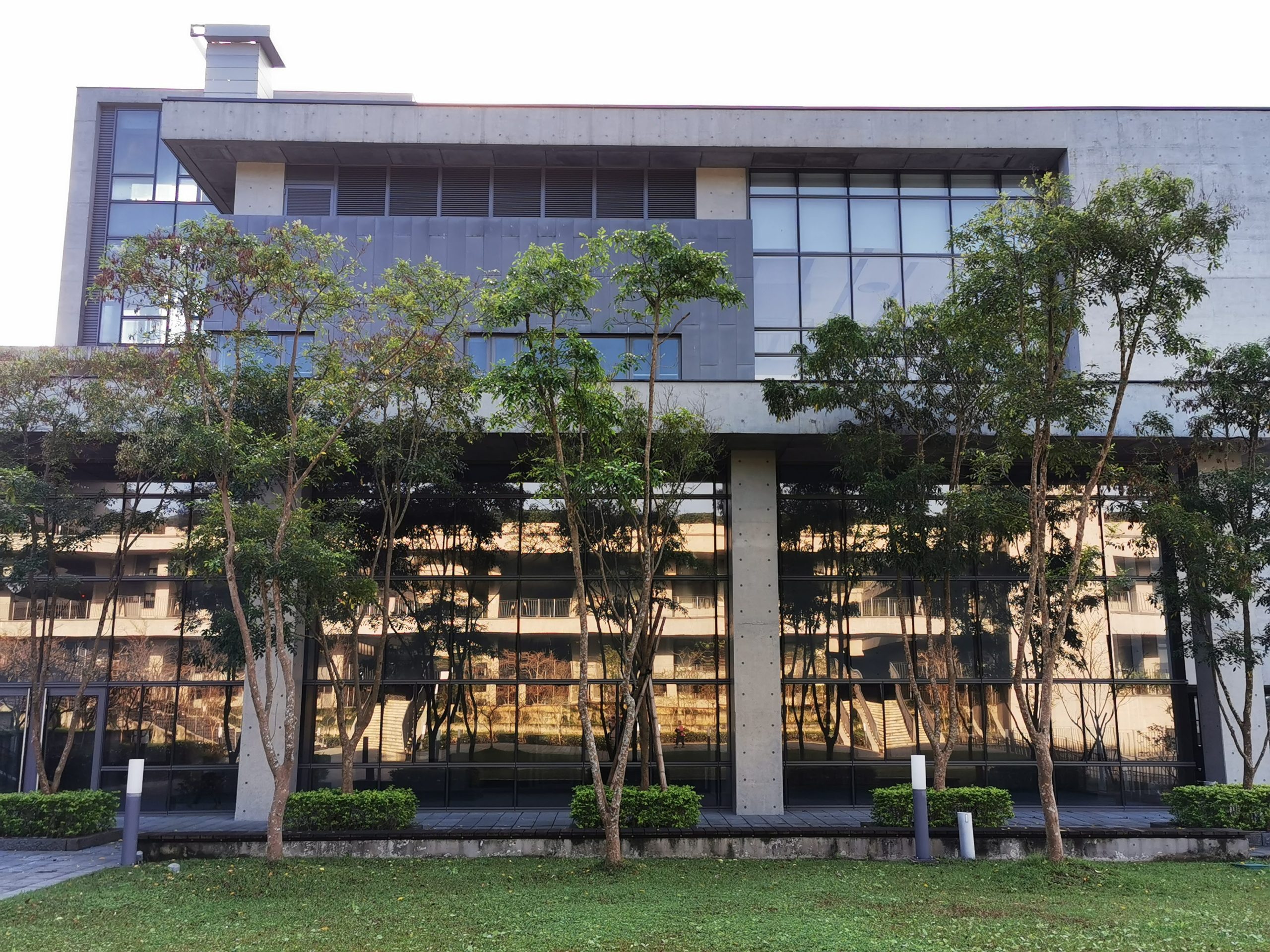
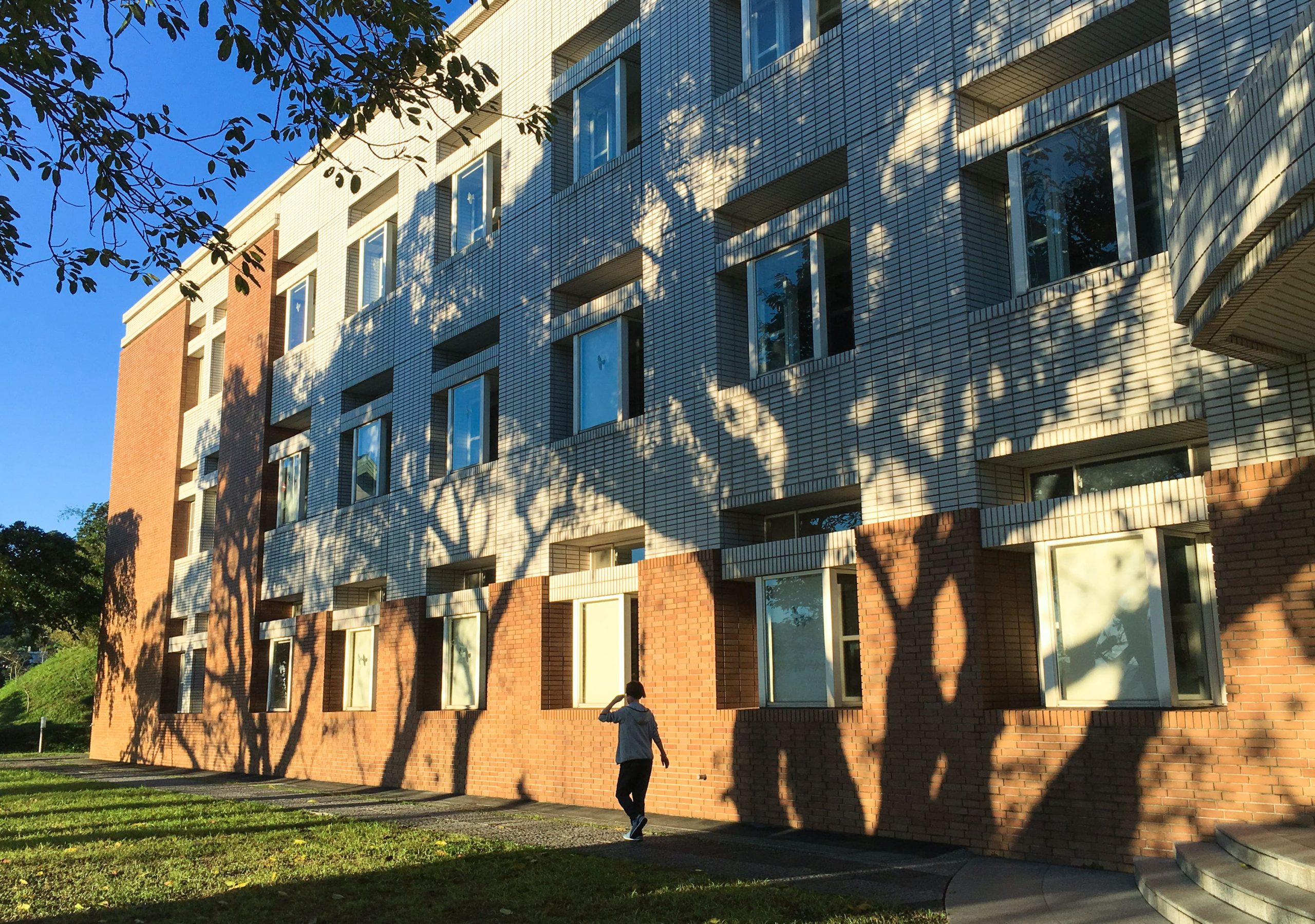
Photos
Videos

Scholarships
Scholarships
Scholarship Inquiry Website
Academic Publication Research Award Inquiry Website
|
Scholarships |
Scholarship Amount |
Eligibility |
|---|---|---|
|
Sangha and Buddhist Studies Department Scholarship for Lay Students |
NTD 22,000~48,000 |
1. Monks and nuns in the Department of Buddhist Studies: If either semester of the previous academic year fails to meet the required standard, the scholarship or grant for the corresponding semester of the following academic year will not be awarded. |
|
Doctoral Student Journal Paper Publication Award |
NTD5,000~10,000 and each article is limited to one application. If the manuscript fee exceeds the award amount, the application will not be accepted. |
1. Eligible applicants: |
|
Subsidy for Doctoral Candidates in Buddhist Studies to Write Doctoral Dissertations |
NTD 15,000/month The scholarship period is from August 1 of the current year to July 31 of the following year. |
1. Applicants should meet the following qualifications: |
|
Subsidy for Doctoral Students to Publish Papers Abroad |
Up to NTD 40,000 per student (a maximum subsidy of NTD 40,000), including airfare and accommodation expenses reimbursed based on actual receipts. |
1. Those who meet the following qualifications may apply for a subsidy in accordance with these guidelines: |
|
Bursary for overseas Chinese students |
Subsidies are disbursed monthly according to the subsidy standards announced by the Ministry of Education in the current year, with each disbursement limited to one year (from September of the current year to August of the following year, and until June for graduating students). |
I. Eligibility: |
|
Scholarships for Outstanding Overseas Chinese Students in Master’s and Doctoral Programs |
NTD10,000/month. The first semester is disbursed from August 1 to January 31 of the following year, and the second semester is disbursed from February 1 to July 31. |
I. Number of Scholarships: |
|
Overseas Community Affairs Council Scholarship for Outstanding Academic Performance of Overseas Chinese Students |
The number of scholarships and the amount will be determined by the Overseas Community Affairs Council. |
I. These guidelines are specifically established by the Overseas Community Affairs Council to encourage overseas Chinese students with excellent academic performance. |
|
Student Awards for Passing Foreign Language Proficiency Tests |
Handled in accordance with the Dharma Drum Institute of Liberal Arts Student Awards for Passing Foreign Language Proficiency Tests Guidelines. |
According to the “Dharma Drum Liberal Arts College Student Foreign Language Proficiency Test Incentive Guidelines”, students of DILA College who, during their enrollment, take English, Japanese, or Chinese language proficiency tests and meet the reward criteria may apply for the incentive in the same semester as the test date or the following semester. Applications submitted after this period will be considered forfeited and will not be accepted. For the same language proficiency test, a student may receive the incentive only once, and each test result is eligible for a single application only. |
Tuition and Miscellaneous Fees
Dharma Drum Institute of Liberal Arts Tuition: NTD/YR 44,000
Dharma Drum Institute of Liberal Arts Miscellaneous Fees: NTD/YR 15,800
Since the student fee standards for the 115th academic year (2026) have not yet been finalized, only the student fee standards for the 114th academic year (2025) are provided for reference. Please visit the https://account.dila.edu.tw/?page_id=374 website for details.
Living Expenses
Accommodation Fee: NTD/YR 30,000 + Accommodation Deposit NTD 1,000 (refundable upon check-out)
[International students who meet the conditions can enjoy a 25%~100% reduction in accommodation fees]
Living Expenses: NTD/YR 80,000~130,000
Introduction to the school’s accommodation environment with pictures and text Link
|
One semester |
One academic year |
Other Notes |
|---|---|---|
|
NTD15,000 |
NTD30,000 |
Accommodation Deposit NTD 1,000 (refundable upon check-out) |